Intelligent Organizations Hub
Advancing how organizations learn, think, decide, and adapt in the age of Human–Organizational-AI Collaboration
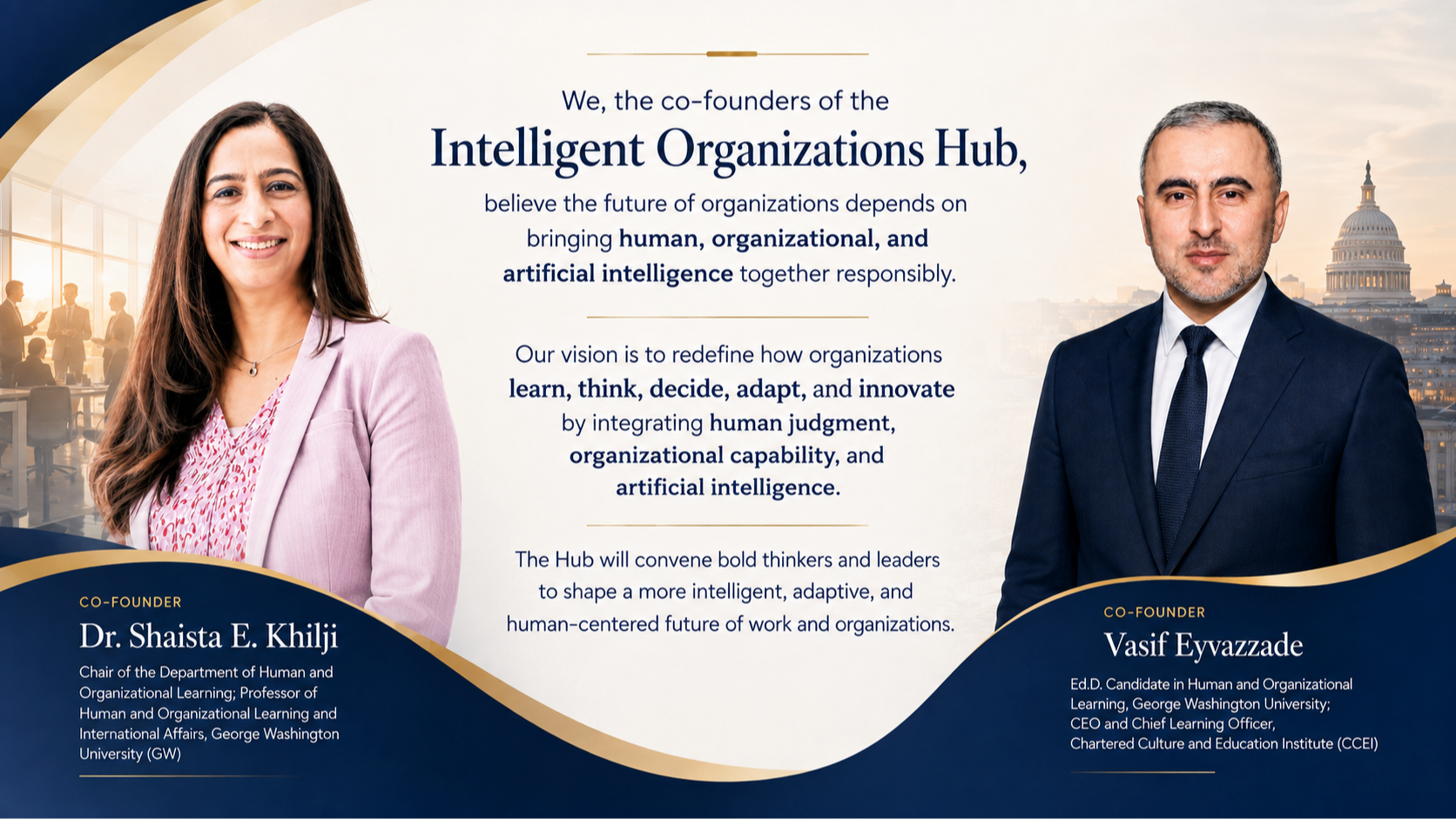
Co-founded by Dr. Shaista E. Khilji and Vasif Eyvazzade, Ed.D. Candidate at The George Washington University, the Intelligent Organizations Hub is an interdisciplinary initiative exploring a fundamental question: What makes an organization intelligent?
The Hub brings together human, organizational, and artificial intelligence to examine how organizations can better learn, think, decide, adapt, innovate, collaborate, and create value in the age of Human–Organizational–AI collaboration.
The initiative will connect executives, faculty, students, practitioners, policymakers, and institutions interested in organizational learning, leadership, decision-making, adaptability, innovation, and responsible technology use.
After registration, you will receive complimentary access to the Intelligent Organizations for Beginners program as well as the Intelligent Organizations Community Group, where members can continue exchanging ideas, resources, research, and practical insights.
We would be delighted to have you join us.
Please register using the link below.
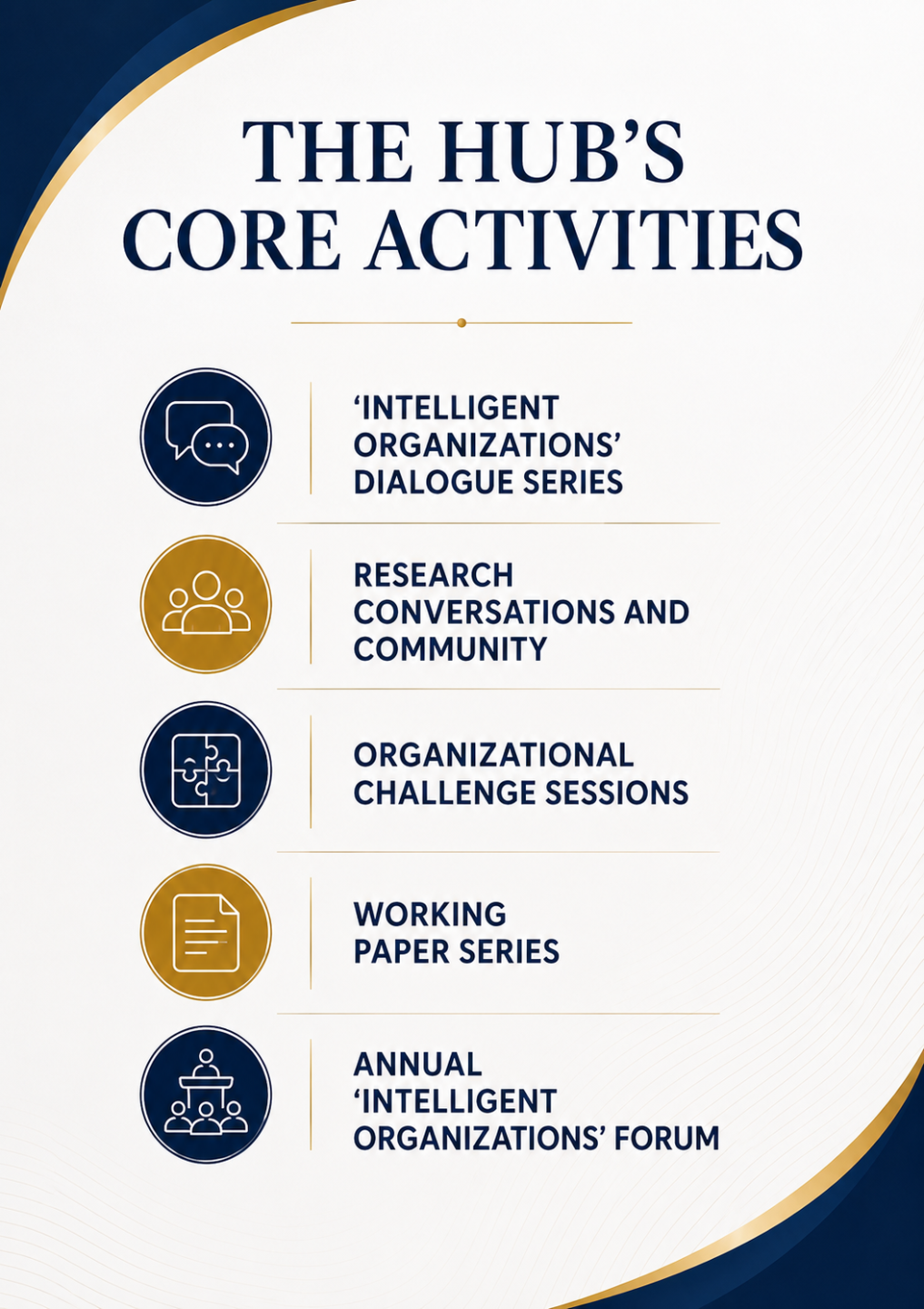
The Hub's core activities will include:
- ‘Intelligent Organizations’ Dialogue Series – monthly or bi-monthly interdisciplinary conversations with key members and stakeholders.
- Research Conversations and Community – informal discussions around emerging questions, concepts, and research ideas to build and support a strong community.
- Organizational Challenge Sessions – organizations bringing real-world challenges for multidisciplinary discussions and solutions.
- Working Paper Series – short papers, frameworks, blogs, case studies, and thought pieces.
- Annual ‘Intelligent Organizations’ Forum – a convening bringing together academics, executives, public-sector leaders, and practitioners to engage in thoughtful discussions of what makes and how to create an intelligent organization. Such a gathering will bring together participants with diverse perspectives to foster a well-balanced understanding and practice.
Intelligent Organizations Membership Community
This question is becoming increasingly urgent, and it is the central question we will explore through the Intelligent Organizations Hub. To understand why it matters, consider several global insights.
The World Economic Forum estimates that structural transformation will affect 22% of today’s jobs by 2030, while nearly 40% of workers’ core skills are expected to change and 63% of employers identify skills gaps as a major barrier to transformation.
At the same time, the International Labour Organization finds that one in four workers globally is in an occupation exposed to generative AI, while emphasizing that transformation is more likely than wholesale replacement. Microsoftreports that 82% of leaderssee this as a pivotal year to rethink strategy and operations, and 81% expect AI agents to become part of company strategy within 12–18 months.
These trends suggest that organizational intelligence cannot be defined by technology alone. It depends on how effectively organizations combine human judgment, organizational learning, knowledge, adaptability, leadership, and artificial intelligence to learn, think, decide, innovate, and respond to complexity.
IOHub News
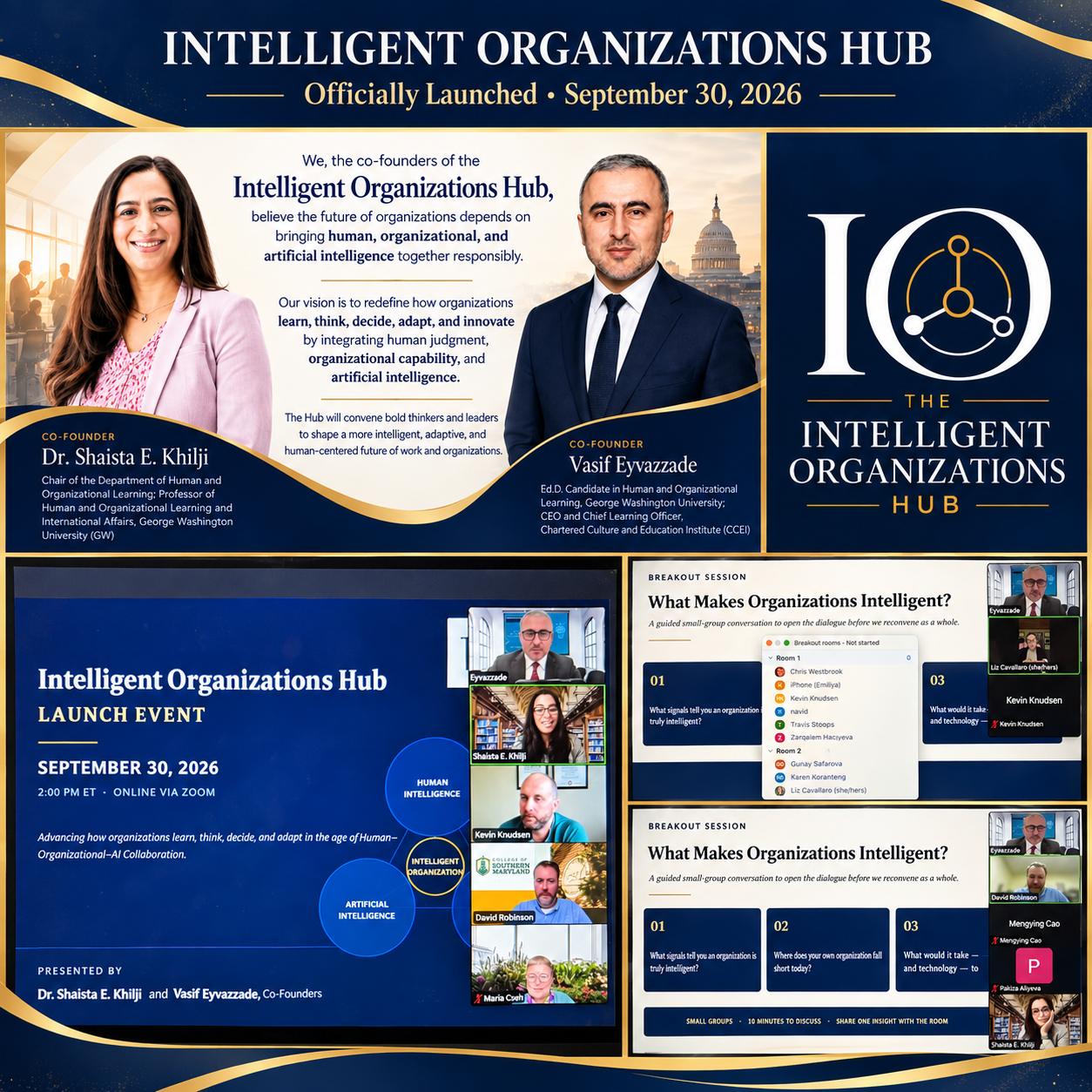
We are pleased to announce that the Intelligent Organizations Hub officially launched on September 30, 2026, bringing together 50+ participants from more than 30 organizations internationally.
Co-founded by Professor Shaista E. Khilji of The George Washington University and Vasif Eyvazzade, CEO and Chief Learning Officer of CCEI and GWU Doctor of Education Candidate, the Hub explores one central question: What makes an organization intelligent?
Its work examines how human, organizational, and artificial intelligence can strengthen organizations’ ability to sense, learn, decide, collaborate, adapt, and innovate.
The Hub will advance this work through dialogues, research conversations, organizational challenge sessions, working papers, and an annual forum.